
For motorheads who grew up admiring the sound of a revving engine and the smell of high-octane petrol, the shift toward electric vehicles (EVs) can feel like learning a foreign language. For years, we’ve judged cars by litres, cylinders, and horsepower. But as you walk through a local showroom today, car specs can look very different. Instead of "displacement," you see "capacity." Instead of "fuel economy," you see "efficiency."
Transitioning to electric doesn't mean you have to lose your enthusiast edge. This guide is designed to translate the jargon of the electric era into terms every petrolhead understands, helping you read an EV spec sheet with the same confidence you had with an internal combustion engine.
Power and Capacity
In the petrol world, the size of your fuel tank is measured in litres, and your engine’s punch is measured in horsepower. In an EV, these concepts are split into two very similar-looking units: kWh and kW.
• kWh (Kilowatt-hour): This is the EV’s “fuel tank”. kWh refers to the energy capacity of the battery. Just as a 60-litre tank holds more fuel than a 40-litre one, a battery with a higher kWh rating stores more energy. To put this into perspective, most modern EVs consume about 15 to 20 kWh to travel 100 kilometres, so a 77 kWh battery would typically offer well over 400km of range on a single charge.
• kW (Kilowatt): This is the direct equivalent of horsepower. The official measure of an electric motor's power output is the kilowatt. For a quick mental conversion, 1 kW is equal to approximately 1.34 horsepower, therefore, an EV with a 160 kW motor is packing a punchy 215 hp, delivering the power and speed that petrolheads may be used to.
Charging
We are used to petrol pumps filling a tank in three minutes. With EVs, the charging speed is the metric that matters most. Refueling speed is measured in kW (yes, the same unit as power output). On a spec sheet, you’ll see two ratings.
• AC Charging: Slower, typically found at HDB car parks where you’ll be parked for a few hours. In Singapore, these public AC chargers are typically rated at 7.4 kW, which can take anywhere from 6 to 10 hours to fully charge a vehicle.
• DC Charging: The "express" version found at some service stations and most shopping malls. Higher DC charging speeds can charge a vehicle in 30 minutes to 1 hour. DC chargers in Singapore are typically rated at 50 kW or more.
Learn more about the different types of EV chargers in Singapore.
Range and Efficiency
While a trip across Singapore is only 50km, the efficiency of an EV still matters for your wallet and your schedule.
• Range (km): Range refers to the maximum distance an EV can travel on a single charge. Most spec sheets use the WLTP (Worldwide Harmonised Light Vehicle Test Procedure) standard as a guideline. Like petrol cars, real-world range can vary based on your driving habits.
• kWh/100km: This is the EV’s version of L/100km. It measures how much energy the car consumes to travel 100 kilometers. In this case, lower is better. A car with a low kWh/100km rating is more "fuel-efficient," meaning lower running costs every time you plug in. For real-life experience, check out Hendry's experience with his Hyundai Kona Electric.
• Regenerative Braking: Regenerative braking is a feature specific to EVs. When you lift off the accelerator, the electric motor reverses its role and acts as a generator, slowing the car down while recapturing energy to top up the battery. It enables "one-pedal driving," which is a game-changer for stop-start traffic. Most modern EVs allow you to adjust the strength of this system, so if you prefer the "coasting" feel of a traditional automatic, you can dial it down as you transition. Hyundai’s EVs have one of the widest range of regenerative braking for you to adjust from 0 to complete control with just one pedal, over 5 levels of adjustments.
From Specs to the Street: Putting It All Together
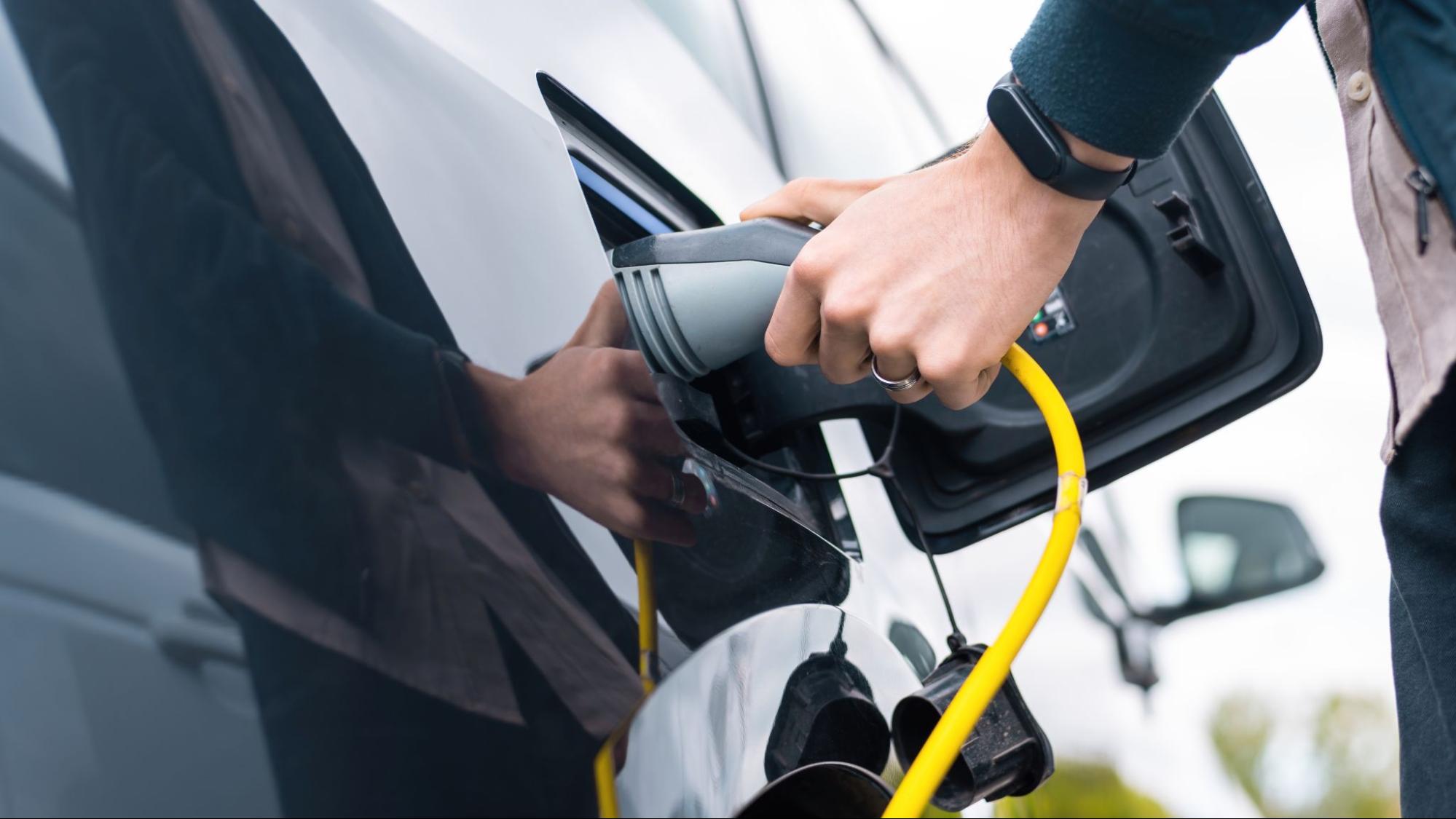
Now that you can "speak EV," the spec sheet becomes a roadmap to performance. A winning combination for any enthusiast is a large battery (kWh) for distance, powerful motors (kW) for thrills, high efficiency (low kWh/100km) for value, and fast DC charging for convenience.
This balance is exactly why the Hyundai IONIQ series has become a benchmark for electric vehicles in Singapore. Models like the IONIQ 5 or IONIQ 6 or IONIQ 9 are built on Hyundai’s dedicated electric platform, offering smooth drives, a comfortable interior, and fast charging so you spend more time on the road and less plugged in.
Specs tell the story, but the drive proves it. Book a test drive today to get behind the wheel of a Hyundai EV.